Major Uttarakhand Cabinet Decisions: Cooperative Policy-2026 Approved, Equal Pay for UPNL Employees and Several Key Reforms
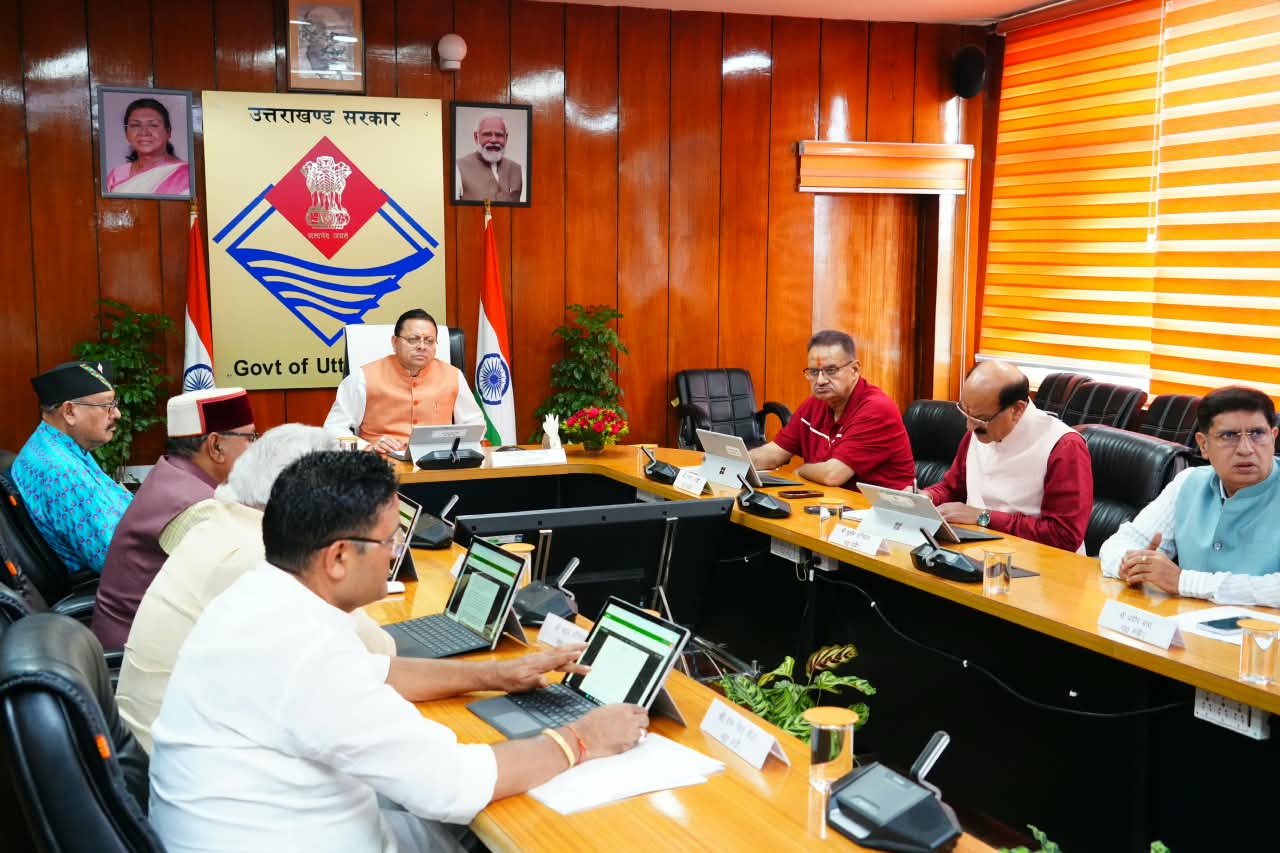
Dehradun, August 25, 2026: The Uttarakhand Cabinet, chaired by Chief Minister Pushkar Singh Dhami, on Tuesday approved several important proposals concerning the development and administration of the state. A total of 17 proposals were placed before the Cabinet. The Uttarakhand Cabinet has taken several important decisions concerning development, employment, transport, energy, healthcare, cooperatives and urban infrastructure. Key decisions include approval of the Uttarakhand State Cooperative Policy-2026, implementation of equal pay for equal work for UPNL employees in three phases, continuation of green cess exemption for CNG vehicles, withdrawal of the green cess relief available to hybrid vehicles, and several measures aimed at strengthening public services.
State Cooperative Policy-2026 Approved
The Cabinet has approved the Uttarakhand State Cooperative Policy-2026. The policy identifies seven missions for the development and strengthening of the cooperative sector.
The government aims to strengthen the cooperative system, boost the rural economy, generate employment opportunities and promote economic activities at the grassroots level.
Motor Vehicle Taxation System to Be Reformed
The Cabinet has approved the Uttarakhand Motor Vehicle Taxation Reform Act, paving the way for necessary reforms in the state’s vehicle-related taxation system.
The Cabinet has also decided to continue the green cess exemption for CNG vehicles. However, the green cess relief currently available to hybrid vehicles has been withdrawn.
Chief Minister Pushkar Singh Dhami has directed officials to study electric vehicle policies implemented in different states and prepare a new EV Policy for Uttarakhand. The policy is aimed at promoting electric mobility and making the state’s transport sector more environment-friendly.
Healthcare and Medical Supply System to Be Strengthened
The Cabinet has approved the formation of the Uttarakhand Medical and Family Welfare Statistical Cadre.
To improve the procurement system for medicines and surgical supplies, approval has also been given for the establishment of the Uttarakhand Medical Supply Corporation. The corporation will function under the leadership of the Chief Secretary and will be responsible for procuring medicines, surgical materials and essential chemicals for the state.
The Cabinet has also approved a proposal to provide one acre of land in Haridwar for the National Centre for Disease Control (NCDC).
Several Administrative Regulations Approved
The Cabinet has approved the Carapal Service Rules.
It has also approved the formation of the Uttarakhand Lokayukta Search Committee-2026 for the selection of members under the Uttarakhand Lokayukta Act, 2014.
The Uttarakhand Population Survey Records Rules have also received Cabinet approval.
Seed Development Corporation Employees to Be Adjusted
A decision has been taken to accommodate Class III and Class IV employees of the Uttarakhand Seeds and Development Corporation in other government departments.
The employees will be adjusted in Udham Singh Nagar and adjoining districts, according to the decision.
Government to Bear 10% Contribution for 116 Houses in Kath Bangla
The government will now bear the 10% amount payable by residents of slum settlements for the 116 houses constructed in the Kath Bangla area along the Rispana River.
The decision is expected to provide financial relief to the beneficiaries.
The Cabinet has also approved works related to drinking water supply and sewerage in urban local bodies, aimed at strengthening basic civic infrastructure in urban areas.
Cancer Institute Approved for Rishikesh
The Cabinet has approved a proposal by the Antyodaya Foundation to establish a Cancer Institute in Rishikesh.
The proposed institute is expected to expand cancer treatment and healthcare facilities in the state and provide patients with better access to specialized medical care.
The Cabinet has also approved the regulations of Uttaranchal University under the Uttarakhand Private Universities Act.
Major Decision for UPNL Employees: Equal Pay for Equal Work
In a major decision concerning UPNL employees, the Cabinet has decided to implement equal pay for equal work in three phases.
The second phase will begin on November 9, and employees engaged up to 2018 will be covered under the equal-pay arrangement.
The Cabinet has also decided to provide Dearness Allowance to UPNL employees who had a break in service from January 1, 2016.
New posts will be created based on sanctioned positions against which UPNL employees are currently not working. A committee will be constituted at the government level to work out the modalities.
Employees will also receive variable Dearness Allowance. In cases where new posts cannot be created, arrangements will be made for the adjustment of the employees.
Dedicated Cell to Be Set Up for Ex-Agniveers
The government will establish a dedicated cell for Agniveers returning after completion of their service.
A proposal for six posts has been made for the cell, which will work on rehabilitation, employment and related issues concerning former Agniveers.
1,320 MW Coal-Based Power Plant Gets Cabinet Nod
In the energy sector, the Cabinet has approved the selection of Adani as the lowest bidder for a 1,320 MW coal-based power plant being taken up by UPCL.
The coal block for the project has already been allocated in Chhattisgarh. The project will be established by Adani Power and has been awarded for a 25-year period.
Government to Ensure Funds for Repair of Rain-Damaged Roads
The Cabinet has also taken a decision regarding the repair of roads damaged due to heavy rainfall.
If Panchayats and urban local bodies face a shortage of funds, the state government will provide the required budget. Officials have been directed to complete the tendering process at the earliest so that road repair work can begin immediately after the rainy season ends.
Continuous Monitoring of Essential Commodities
Officials have been directed to continuously monitor the availability and supply of essential commodities, including sugar.
The objective is to ensure adequate supplies in the market and prevent inconvenience to the public.
Statues of Martyrs to Be Installed in Their Native Villages
In a significant decision to honour the state’s martyrs, the government has decided that statues of martyrs will be installed in their respective villages.
The initiative aims to honour their supreme sacrifice and ensure that their contribution and legacy are remembered by future generations.
Focus on Development, Employment and Public Welfare
The Cabinet decisions reflect a broad focus on rural economic development, employment, employee welfare, healthcare, transport reforms, electric mobility, energy security, urban infrastructure and road connectivity.
Among the major decisions, the approval of the Cooperative Policy-2026, phased implementation of equal pay for equal work for UPNL employees, creation of a dedicated Agniveer cell and measures to strengthen medical procurement and urban infrastructure are expected to have a significant impact on governance and public welfare in Uttarakhand.