Early Warning System to Be Installed at Vasundhara Tal to Strengthen Glacial Lake Monitoring in Uttarakhand
Dehradun: Uttarakhand has launched a major initiative to strengthen scientific monitoring of glacial lakes and reduce the potential risk of Glacial Lake Outburst Floods (GLOFs) in the state’s high Himalayan regions. The initiative will begin with the installation of an advanced early warning system at Vasundhara Tal in Chamoli district.
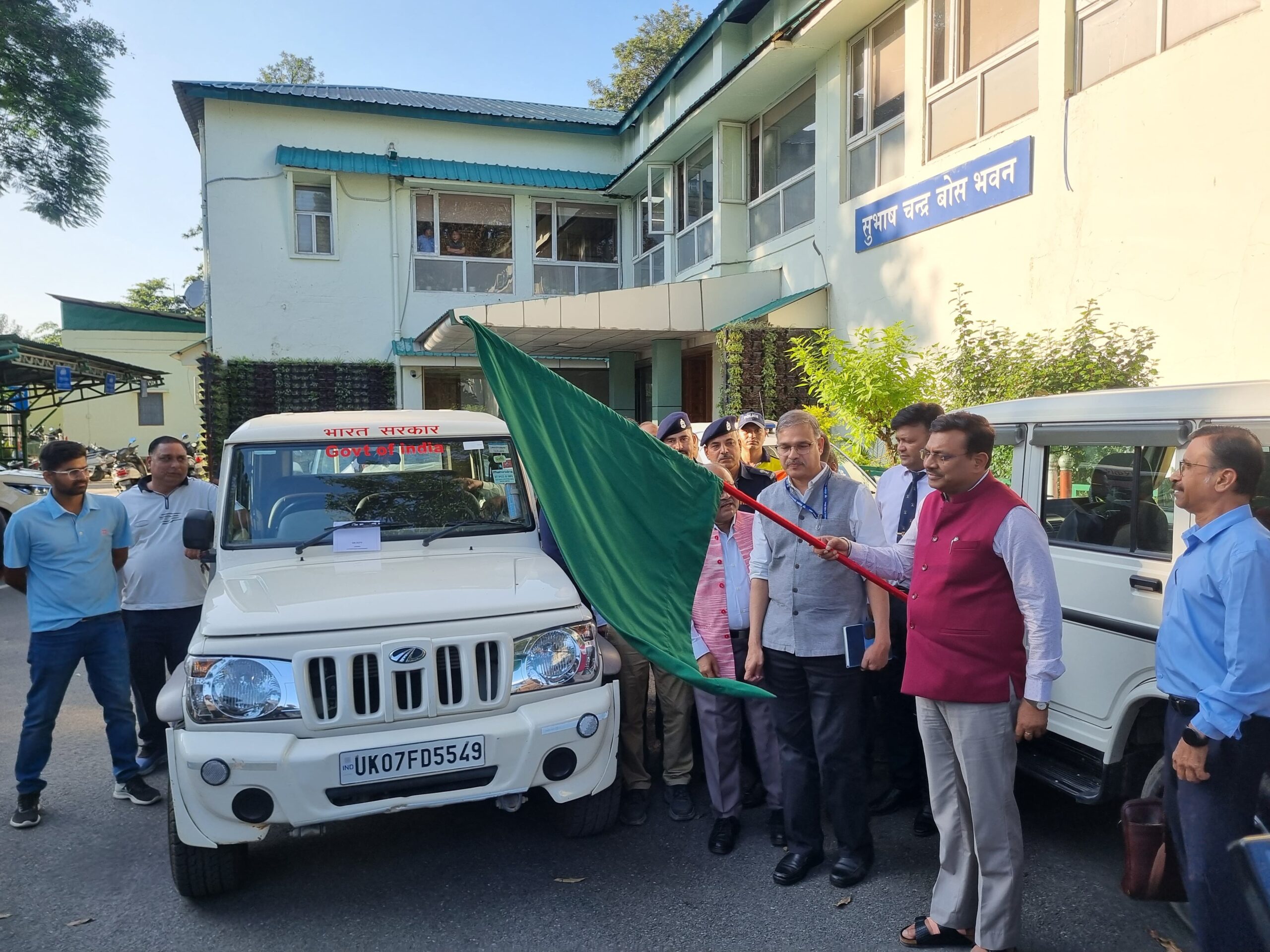
Chief Secretary Anand Bardhan flagged off the scientific and technical team from the Secretariat on Tuesday for the installation of the monitoring and early warning system at Vasundhara Tal. Extending his best wishes to the team, he said the initiative would help improve understanding of risks associated with glacial lakes and strengthen preparedness to deal with potential GLOF events.
The Chief Secretary said advanced sensors, satellite communication and real-time data monitoring would enable continuous assessment of changes in water levels, weather conditions, snow cover and water flow in glacial lakes. The system will help identify abnormal changes and facilitate timely alerts to the concerned authorities.

Campaign Scheduled from September 29 to October 15
This is the first scientific team being deployed to a high Himalayan glacial lake in Uttarakhand for the installation of a monitoring and early warning system. The field campaign is scheduled from September 29 to October 15, 2026.
Chief Minister Pushkar Singh Dhami also extended his best wishes to the scientists, technical experts and security personnel involved in the mission. He said that given Uttarakhand’s location in the high Himalayan region, continuous monitoring of glacial lakes and preparedness for associated risks are extremely important.
The Chief Minister said the installation of an early warning system at Vasundhara Tal is an important step towards strengthening the state’s disaster preparedness through science and technology. He emphasized coordination among scientific institutions, experts and disaster management departments to further strengthen modern monitoring and early warning mechanisms in the high Himalayan areas.
CBRI and Wadia Institute Experts to Install System
The campaign is being conducted by the Uttarakhand State Disaster Management Authority (USDMA) under the National Glacial Lake Outburst Flood Risk Reduction Programme.
Scientists and technical experts from the Central Building Research Institute (CBRI), Roorkee, and the Wadia Institute of Himalayan Geology, Dehradun, are part of the expedition.
Considering the difficult terrain and remoteness of the high Himalayan region, personnel from the State Disaster Response Force (SDRF), National Disaster Response Force (NDRF) and Indo-Tibetan Border Police (ITBP) will accompany the team for security, transportation and field support.
USDMA is providing the required coordination and logistical support. Satellite phones and Low Earth Orbit (LEO) communication devices have also been provided to ensure communication and coordination with USDMA even in areas without mobile network connectivity.
Equipment to Monitor Vasundhara Tal
The early warning system at Vasundhara Tal will comprise a range of sensors and monitoring equipment, including:
- Water-level sensors: To monitor fluctuations and abnormal changes in the lake’s water level.
- Automatic weather station: To measure temperature, humidity, rainfall, wind speed and direction, atmospheric pressure and light intensity.
- Snow-depth sensors: To monitor changes in snow depth around the lake.
- Snow sub-surface temperature sensors: Eight sensors will monitor temperature variations at different depths within the snow.
- Tilt and accelerometer sensors: To monitor tilt, vibrations and movement at selected locations.
- Water-flow sensors: To detect changes in water flow.
- Solar power system: To provide power to the equipment in the remote high-altitude region.
- Satellite communication system: To transmit data to the base station where mobile connectivity is unavailable.
- Data logger and monitoring dashboard: To record sensor data, display information online and generate alerts based on predefined thresholds.
Risk Assessment Through Real-Time Technical Data
The early warning system will facilitate continuous monitoring of environmental and hydrological changes in and around Vasundhara Tal. Data received from the sensors will help identify potentially abnormal changes and support timely alerts to the relevant response mechanisms.
Chief Secretary Anand Bardhan said scientific monitoring of glacial lakes and installation of modern early warning systems would further strengthen disaster preparedness in Uttarakhand. The system being established at Vasundhara Tal could also provide a foundation for deploying similar systems at other vulnerable glacial lakes in the future.

Strengthening Early Warning Systems a Priority: Madan Kaushik
Disaster Management and Rehabilitation Minister Madan Kaushik said strengthening scientific monitoring of glacial lakes is among the state government’s priorities.
He said the installation of the early warning system at Vasundhara Tal marks an important step towards monitoring risks associated with glacial lakes. The system will facilitate continuous collection of data related to water levels, weather conditions, snow cover, water flow and other key parameters.
He added that the government is focusing on the use of modern technology and scientific expertise to reduce disaster risks and strengthen the safety of communities living in high Himalayan areas.
344 Glacial Lakes Identified in Uttarakhand
Secretary Disaster Management and Rehabilitation Vinod Kumar Suman said the state government is continuously monitoring glacial lakes and undertaking scientific studies to assess potential GLOF risks.
According to 2023 data from the National Remote Sensing Centre (NRSC), a total of 344 glacial lakes have been identified in Uttarakhand.
Of these, 13 glacial lakes have been identified as high-risk lakes by the National Disaster Management Authority (NDMA) and technical institutions. These include one lake in Bageshwar, four in Chamoli, six in Pithoragarh, one in Tehri Garhwal and one in Uttarkashi.
Suman said bathymetric surveys of six high-risk glacial lakes have been completed as part of the scientific and technical assessment. These include Saraswati Tal and Vasundhara Tal in Chamoli, Kedartal in Uttarkashi, and Mabangs, Pyunggru and Syunkti Yankti proglacial lakes in the Darma Valley of Pithoragarh.
The surveys have generated important hydrological data, including lake depth and water-holding capacity. These findings will support scientific assessment of potential GLOF risks and help strengthen disaster management preparedness.
Focus on Protecting Communities and Critical Infrastructure
Vinod Kumar Suman said potential GLOF events could pose risks to settlements, roads, bridges, hydropower projects and other critical infrastructure located downstream.
He said the state is therefore focusing on scientific risk identification, regular monitoring and strengthening of timely warning mechanisms. The objective is to ensure that necessary safety, rescue and response measures can be initiated in vulnerable areas well in advance on the basis of scientific data.