Integration of Traditional Knowledge with Modern Science Essential for Disaster Management: Lt Col Bhandari
Two-Day National Workshop on Monsoon Preparedness Begins in Dehradun
Experts Deliberate on Disaster Risk Reduction, Early Warning Systems, Flood Management and Technological Innovations
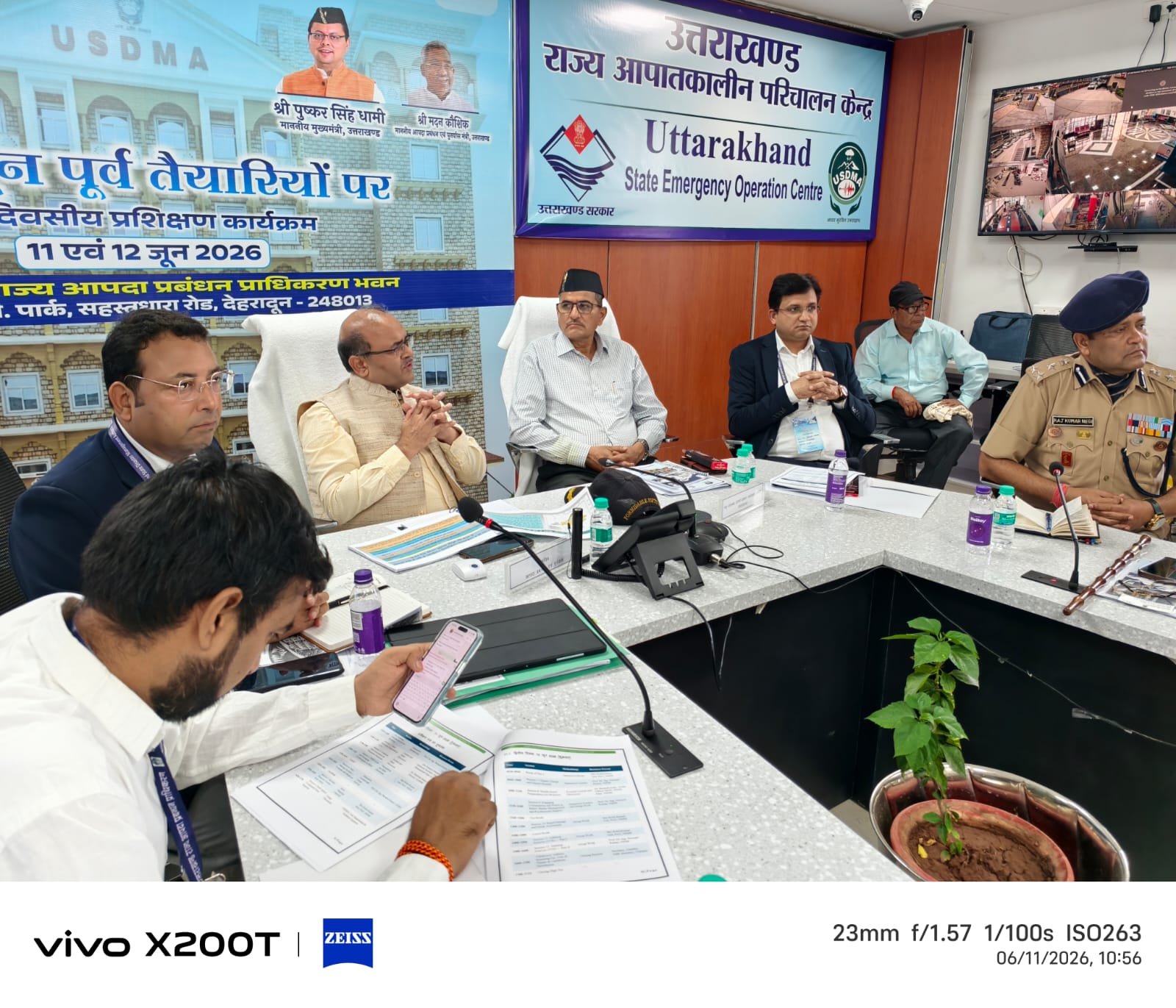
Dehradun: A two-day national training programme focused on monsoon preparedness commenced on Thursday at the Uttarakhand State Disaster Management Authority (USDMA) headquarters. The programme has been jointly organized by the National Institute of Disaster Management (NIDM), Ministry of Home Affairs, Government of India, and the Uttarakhand State Disaster Management Authority (USDMA).
The training programme brought together officials from various government departments, district administrations, disaster management agencies, technical experts and representatives of emergency response organizations.
Inaugurating the programme, Vice Chairman of the State Disaster Management Advisory Committee, Lt Col Raghuveer Singh Bhandari (Retd.), emphasized that disaster management should not remain confined to government agencies alone. He said every citizen must be empowered and trained to respond effectively during emergencies, as local residents are often the first responders during disasters.
He highlighted the importance of preserving and utilizing traditional community knowledge alongside modern scientific methods and emerging technologies. According to him, people living in mountainous regions have developed a unique understanding of weather patterns, terrain, water sources and natural indicators through generations of experience. This indigenous knowledge can play a significant role in identifying potential disaster risks and strengthening preparedness measures.
Lt Col Bhandari stressed the need to further strengthen disaster risk reduction initiatives at the village level. He called for greater participation of village heads, local representatives, self-help groups, youth organizations, women’s groups and voluntary organizations in disaster management activities. Active involvement of local leadership, he said, enhances community participation and ensures faster and more effective response during emergencies.
Drawing from his military experience, he noted that Uttarakhand has a large population of ex-servicemen whose discipline, leadership skills, operational expertise and experience in handling emergency situations can be effectively utilized in disaster management efforts across the state.
Strong Inter-Departmental Coordination Crucial for Effective Disaster Management
Secretary, Disaster Management and Rehabilitation, Vinod Kumar Suman, said the primary objective of the training programme is to strengthen coordination among departments and familiarize officials with the latest developments, innovations and best practices in disaster management.
He emphasized that disaster management is a multi-sectoral subject requiring clear communication, coordinated action and well-defined responsibilities among all stakeholders. Predefined roles and responsibilities help avoid duplication of efforts and ensure optimum utilization of resources during emergencies.
Focus Areas of the Training Programme
Presenting the programme outline, Additional Chief Executive Officer (Administration), Prakash Chandra, informed that the two-day workshop will cover a wide range of critical topics including:
- Early Warning Systems and last-mile dissemination of alerts
- Disaster Risk Assessment
- Flood and Urban Flood Management
- Protection of Vulnerable Communities
- Incident Response System (IRS)
- Evacuation Planning
- Health Sector Preparedness
- Climate Change-Induced Risks
- Emerging Technologies in Disaster Management
- Multi-Agency Coordination
- Rapid Damage Assessment
- Post-Disaster Needs Assessment (PDNA)
Experts from various institutions will deliver lectures and engage participants in detailed discussions on these subjects.
Additional Chief Executive Officer (Implementation) and DIG Rajkumar Negi stated that USDMA has been maintaining continuous coordination with all districts and line departments in view of the approaching monsoon season. Regular review meetings are being conducted at state, district and sub-division levels, while special monitoring is underway in vulnerable areas.
Sensitive Spots Should Be Declared “No Selfie Zones”
During the workshop, Secretary Vinod Kumar Suman expressed concern over the growing trend of making reels and taking selfies near rivers, streams, waterfalls, deep gorges and other hazardous locations.
He observed that in the pursuit of social media popularity, many individuals ignore safety precautions, resulting in an increasing number of accidents. He directed all districts to identify vulnerable and accident-prone locations and designate them as “No Selfie Zones.”
He further instructed authorities to install warning signboards, undertake barricading and implement other necessary safety measures at such sites. He also suggested developing designated “Selfie Safe Zones” at secure tourist locations, allowing visitors to enjoy natural beauty while ensuring their safety.
Deliberations on Early Warning Systems and Climate Resilience
Speaking during the technical sessions, Prof. Dr. Navneet Kumar of NIDM highlighted that climate change has significantly increased both the frequency and intensity of disasters, thereby elevating overall risk levels.
He provided detailed insights into satellite-based remote sensing technology, explaining how it enables effective monitoring and data collection from remote and inaccessible regions. Stressing the importance of Early Warning Systems, he said timely dissemination of alerts can substantially reduce loss of life and property during disasters.
Participants were also introduced to various digital tools and information platforms, including the Sachet App, real-time weather information services provided by the India Meteorological Department (IMD), and the Damini App, which provides lightning-related alerts.
Director of ULMMC, Dr. Shantanu Sarkar, spoke about ongoing national efforts aimed at landslide risk reduction. He noted that several scientific institutions are working on landslide forecasting systems and expressed confidence that significant progress and positive outcomes would be achieved in the near future.
The programme was attended by Secretary Disaster Management and Rehabilitation Vinod Kumar Suman, SCEO Administration Prakash Chandra, ACEO Implementation DIG Rajkumar Negi, Prof. Navneet Kumar of NIDM, JCEO Mohammad Obaidullah Ansari, Assistant Professor Rohit Kumar, Dr. Shantanu Sarkar, along with officials and experts from the Army, SDRF, NDRF, Police and various other departments.