Early Warning System to be Strengthened in Uttarakhand; AWS and Doppler Radars to be Installed Across Districts
Dehradun: Under the directions of Chief Minister Pushkar Singh Dhami, the Uttarakhand government is taking significant steps to modernize and strengthen the state’s disaster management framework. Efforts are underway to enhance the Early Warning System to reduce disaster risks and ensure timely and accurate alerts for citizens.
In the coming months, advanced technology-based monitoring equipment will be installed across several districts of the state. These systems will enable early detection of adverse weather conditions and potential disasters, helping minimize loss of life and property.
Secretary Disaster Management and Rehabilitation Vinod Kumar Suman informed that the Defence Geoinformatics Research Establishment (DGRE) will install Automated Weather Stations (AWS) in 10 districts of Uttarakhand. The highest number—eight AWS units—will be set up in Uttarkashi and Tehri districts. Additionally, seven stations will be installed in Pauri, five in Dehradun, three each in Rudraprayag and Bageshwar, two in Almora, and one each in Nainital and Haridwar. These systems will provide accurate and real-time weather data, enabling authorities to issue timely warnings.
Alongside this initiative, the India Meteorological Department (IMD) will establish Doppler Weather Radars in three districts among Dehradun, Almora, Champawat, and Chamoli. Doppler radars will allow real-time monitoring of rainfall patterns, cloud movement, and weather activities, significantly strengthening disaster preparedness and response capabilities. District administrations have been instructed to finalize land selection and submit proposals to the state government at the earliest.
Comprehensive Review of Disaster Management Preparedness
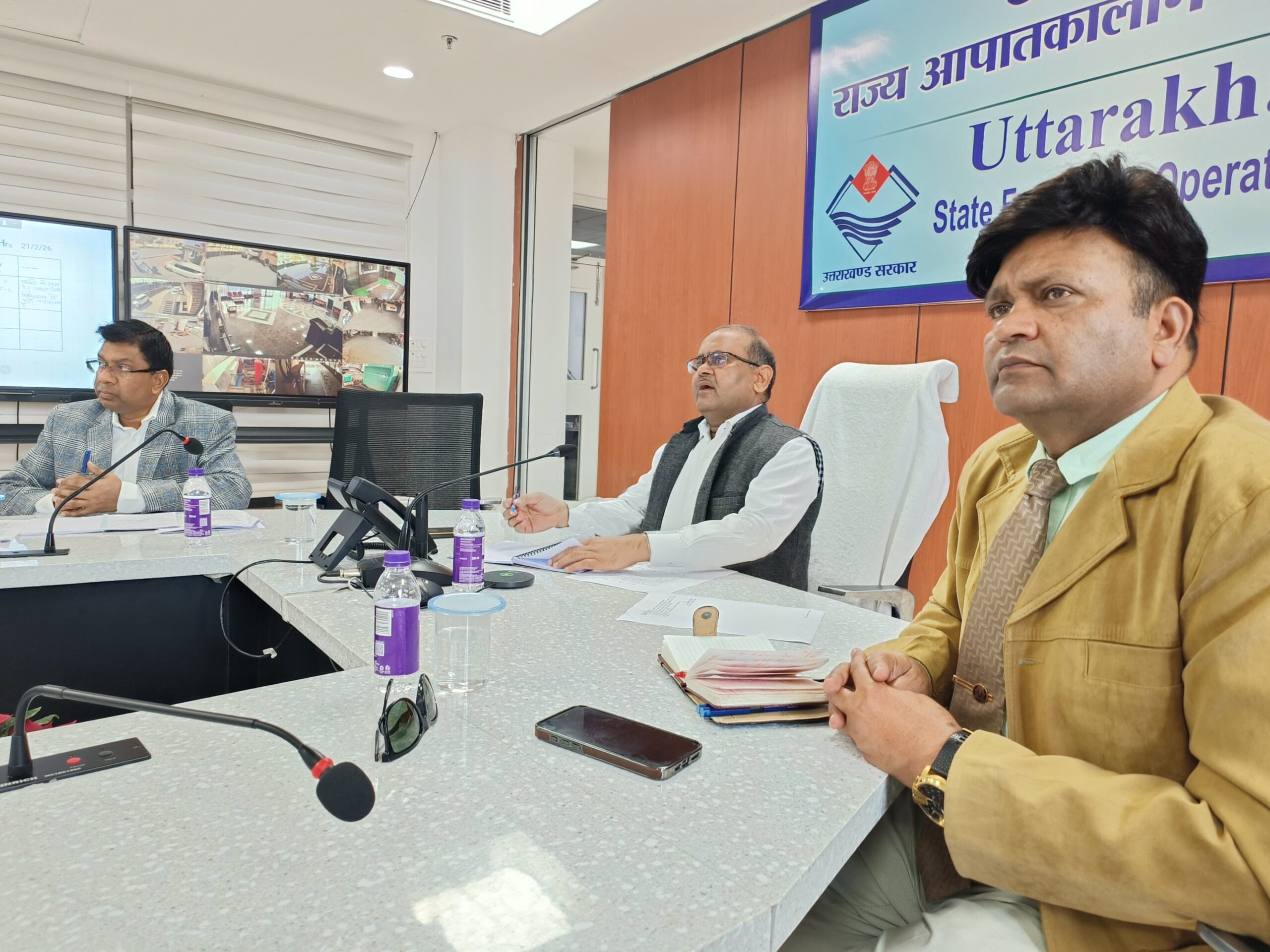
During a statewide review meeting held with all 13 districts, the Secretary reviewed multiple aspects of disaster management preparedness. Officials were directed to promptly upload details of disaster-related expenditures on the Government of India’s NDMIS Portal (NDMIS) portal to ensure transparency, monitoring, and efficient implementation of relief measures.
The meeting also reviewed pending cases related to declaring missing persons as deceased during disasters so that affected families can receive relief assistance without delay. Matters concerning financial assistance and issuance of death certificates for Nepali-origin victims of disasters in 2025 were also discussed, with districts instructed to submit detailed reports to the government for further action at the central level.
GIS Mapping of Disaster Management Equipment
To improve emergency response efficiency, all disaster management and relief equipment available across districts will undergo GIS-based mapping. Departments and district administrations have been instructed to upload complete details of available resources on the IDRN Portal (IDRN) portal. Completion of this process before the monsoon season will ensure quick access to resource information during emergencies, enabling faster rescue and relief operations.
Disaster Dedicated Radio Network in Every District
To strengthen communication systems during emergencies, the state will expand the Disaster Dedicated Radio Network (DDRN) model implemented in Rudraprayag district to other districts. DDRN is a secure long-range communication network equipped with high-speed internet, voice, and video communication facilities. It ensures uninterrupted coordination among administration, emergency services, and relief agencies even when conventional mobile and internet networks fail during disasters.
Emergency Operation Centres at Tehsil Level
Further strengthening the disaster response mechanism, Emergency Operation Centres will now be established at the tehsil level (TEOC). Similar to the State Emergency Operation Centre (SEOC) and District Emergency Operation Centres (DEOC), TEOCs will facilitate faster local response, improved coordination, and immediate initiation of rescue and relief operations. Modern disaster-response equipment will also be provided at the tehsil level.
The state government aims to build a technology-driven early warning ecosystem, making Uttarakhand more resilient, prepared, and capable of managing natural disasters effectively.