Uttarakhand to Strengthen Healthcare Infrastructure with Advanced Medical Technology
State to Receive 4 MRI Machines, 5 Digital Mammography Systems, and 75 AI-Enabled Handheld X-ray Devices under Prime Minister’s Initiative
Modern diagnostic facilities to improve access to quality healthcare, especially in remote and hilly regions
New Delhi/Dehradun, June 29, 2026:
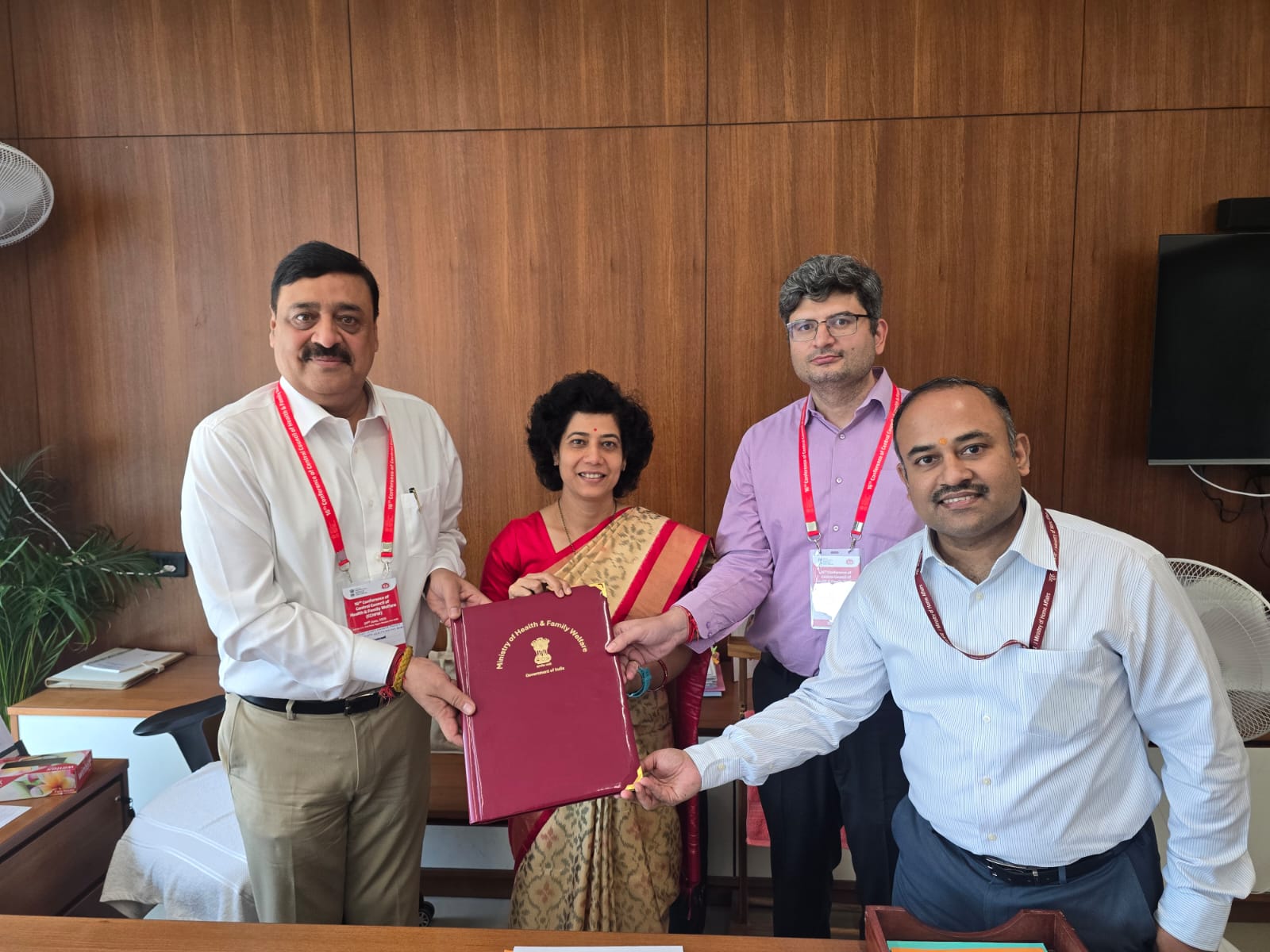
In a significant step towards modernizing and strengthening healthcare services in Uttarakhand, the Ministry of Health and Family Welfare, Government of India, and the Government of Uttarakhand signed a Memorandum of Understanding (MoU) on Monday at Kartavya Bhavan, New Delhi. The agreement aims to enhance diagnostic infrastructure across government healthcare institutions by providing state-of-the-art medical equipment.
The MoU was signed on behalf of the Government of Uttarakhand by Health Secretary Vinay Shankar Pandey, in the presence of Aradhana Patnaik, Additional Secretary, Ministry of Health and Family Welfare, Government of India.
Under the Prime Minister’s initiative, Uttarakhand will receive four Magnetic Resonance Imaging (MRI) machines, five Digital Breast Tomosynthesis (DBT) mammography systems, and 75 Artificial Intelligence (AI)-enabled portable handheld X-ray devices. These advanced diagnostic tools will significantly strengthen the state’s public healthcare infrastructure and improve access to high-quality diagnostic services.
The deployment of these modern medical devices is expected to enhance the timely and accurate diagnosis of a wide range of diseases. The MRI machines will facilitate advanced imaging for neurological, orthopedic, and other complex medical conditions, while the digital mammography systems will play a vital role in the early detection and diagnosis of breast cancer.
A major highlight of the initiative is the introduction of 75 AI-enabled portable handheld X-ray machines, which will greatly improve healthcare delivery in Uttarakhand’s remote, rural, and mountainous regions. These lightweight devices will enable healthcare professionals to conduct diagnostic imaging closer to patients’ homes through primary healthcare centres and mobile medical units. The integration of artificial intelligence will support clinicians by assisting in the preliminary interpretation of X-ray images, leading to faster, more accurate diagnoses and timely treatment.
The initiative is expected to reduce the need for patients to travel long distances to access advanced diagnostic services at tertiary hospitals, thereby saving time, reducing healthcare costs, and ensuring equitable access to quality medical care across the state.
Senior officials from both the Central and State Governments attended the signing ceremony, including Sandeep Tiwari, Mission Director, National Health Mission (NHM), Uttarakhand. Officials described the agreement as a landmark step towards strengthening Uttarakhand’s healthcare ecosystem through technology-driven medical infrastructure, ensuring improved healthcare outcomes and better medical services for citizens across the state.