Public Welfare, Employment, Labour Rights and Development Get Major Boost: Key Decisions of Dhami Cabinet
Dehradun, August 7, 2026: The Uttarakhand government has taken a series of important decisions aimed at strengthening the rural economy, increasing the income of livestock farmers, protecting workers’ rights, improving educational facilities, expanding sports and judicial infrastructure, and giving fresh momentum to tourism and industrial development.
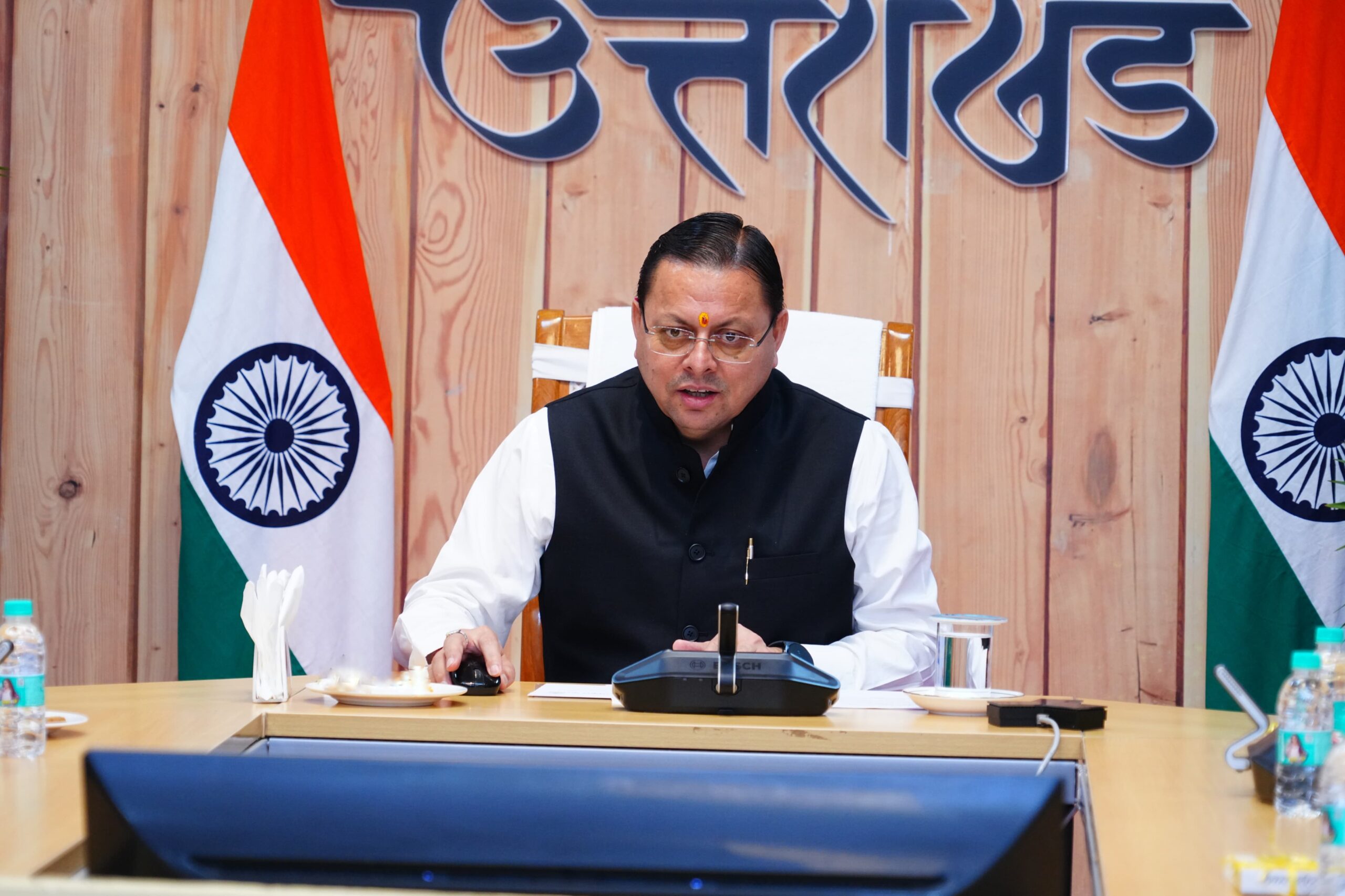
The decisions were taken at a Cabinet meeting chaired by Chief Minister Pushkar Singh Dhami. The details were shared with the media during a press briefing by Director General of Information and Additional Secretary to the Chief Minister Banshidhar Tiwari.
The Cabinet decisions cover a wide range of sectors, including animal husbandry, labour welfare, social welfare, education, eco-tourism, taxation, judicial infrastructure, sports, drinking water, forest development and industrial relations.
The decisions are expected to strengthen employment generation, self-employment, social security, transparent governance and inclusive development across the state.
General Category Livestock Farmers to Get Subsidy for Cows and Buffaloes
In a major decision to expand the state-sector cattle-rearing scheme, the Cabinet has decided to include livestock farmers from the general category under the scheme.
Beneficiaries will now have the option to purchase either a cow or a buffalo. The unit cost of an animal has also been increased from ₹40,000 to ₹60,000.
Beneficiaries belonging to Scheduled Castes and Scheduled Tribes will be eligible for a subsidy of up to 90 per cent, while general-category beneficiaries will receive a subsidy of up to 60 per cent.
Around 2,128 livestock farmers are expected to benefit during the first year. The initiative is aimed at increasing rural incomes, promoting self-employment and strengthening the rural economy, while also helping reduce migration from the hills.
Uttarakhand Wage Code Rules, 2026 Approved
In a significant decision concerning workers’ rights, the Cabinet approved the implementation of the Uttarakhand Wage Code Rules, 2026 under the Code on Wages, 2019.
The rules provide for minimum wages, double payment for overtime, payment of wages by the 7th of every month, digital wage payments and equal pay for women and men performing equal work.
The new framework is intended to strengthen wage security and improve transparency in the employment system.
New Rules for SC and ST Hostels
The Cabinet also approved the Operating Rules, 2026 for hostels run under the Social Welfare Department for Scheduled Caste and Scheduled Tribe students.
The new framework will focus on providing students with a better academic environment, accommodation, food and other essential facilities. The objective is to ensure the overall development of meritorious SC and ST students and provide them with better opportunities to pursue education.
Fresh Push for Eco-Tourism
To promote eco-tourism in Uttarakhand, the Cabinet approved changes in the composition of the High-Powered Committee (HPC) constituted for the sector.
Senior officials from the Forest Department will be included in the committee to strengthen coordination on issues such as environmental conservation, herbal resource management, waste management and greater participation of local communities.
The initiative aims to promote tourism while protecting Uttarakhand’s fragile natural environment and creating livelihood opportunities for local communities.
Ordinance Approved to Amend Uttarakhand GST Act
The Cabinet approved the proposal to bring an ordinance to amend the Uttarakhand Goods and Services Tax Act, 2017, in line with amendments made by the Central Government.
The move will ensure that the state’s taxation framework remains updated and aligned with changes in national GST laws.
Around 40 Hectares Approved for High Court Complex in Haldwani
In a major decision related to judicial infrastructure, the Cabinet approved the proposal to transfer approximately 40 hectares of forest land, as required, from the 73 hectares available in the Lamachaur area of Haldwani for construction of the High Court complex.
The decision is expected to facilitate further progress on the proposed judicial infrastructure in Haldwani and strengthen the state’s judicial facilities.
122 Regular Posts to Be Created at State Sports University
The Cabinet approved the creation of 122 regular posts for the smooth functioning of the Uttarakhand State Sports University at Gaulapar, Haldwani.
Additional technical and support staff will be engaged through an outsourcing arrangement.
The decision is expected to strengthen the institutional framework of the university and provide athletes with better sports infrastructure, quality training and modern facilities.
Changes in Committee for Bengali Scheduled Caste Assistance Fund
Keeping in view the interests of the Bengali-origin Scheduled Caste community residing in the Dineshpur and Shaktifarm areas, the Cabinet approved changes in the composition of the Bengali Scheduled Caste Assistance Fund Management Committee.
Under the revised arrangement, the positions of vice-chairperson and members will be filled through nominations from the same community, enhancing its representation and participation.
Discriminatory Provisions to Be Removed from Cooperative Rules
In compliance with directions of the Supreme Court, the Uttarakhand Cooperative Societies Rules, 2004 will be amended.
The Cabinet approved the removal of discriminatory provisions relating to leprosy and their replacement with provisions concerning mental disabilities in accordance with judicial directions.
The amendment is intended to bring the cooperative regulatory framework in line with principles of equality and the directions of the judiciary.
New Protocol for Transfer of Jal Jeevan Mission Schemes
A new mechanism will be introduced for the commissioning and transfer of rural drinking-water schemes under the Jal Jeevan Mission.
The Cabinet approved implementation in Uttarakhand of the protocol prescribed by the Government of India for commissioning rural drinking-water projects and transferring them to Gram Panchayats and Village Water and Sanitation Committees.
The move is expected to make post-construction handover and local management of drinking-water schemes more systematic.
Forest Development Corporation Recruitment Process to Become More Transparent
The Cabinet approved the Uttarakhand Forest Development Corporation Service (Amendment) Regulations, 2026.
Under the amended regulations, recruitment to the post of scaler will include a 100-mark written examination.
The provision is aimed at making the recruitment process more transparent, structured and merit-based.
Ganga Expressway Extension to Haridwar Gets Green Light
In a major infrastructure decision, the Cabinet approved the proposal for signing a Memorandum of Understanding between the governments of Uttar Pradesh and Uttarakhand for extending the Ganga Expressway from Meerut to Haridwar.
The extension is expected to improve connectivity to Haridwar and provide a boost to religious tourism, trade, industrial investment and employment opportunities.
Improved road connectivity between the two states is also expected to strengthen regional economic activity.
Uttarakhand Industrial Relations Rules, 2026 Approved
The Cabinet approved the Uttarakhand Industrial Relations Rules, 2026 under the Industrial Relations Code, 2020.
The rules provide for time-bound resolution of industrial disputes, recognition of trade unions, constitution of grievance redressal committees, a clearly defined process for strikes and lockouts, and provisions for a worker re-skilling fund.
The framework is intended to make industrial relations more transparent and structured while strengthening workers’ skills and employability.
Focus on Inclusive Growth and Employment Generation
The Cabinet’s decisions are expected to have a wide-ranging impact on rural livelihoods, employment, labour welfare, education, sports, tourism, drinking water and industrial development in Uttarakhand.
Expansion of the livestock subsidy scheme will support self-employment and rural incomes, while the new labour rules will strengthen workers’ rights and wage security. The new SC and ST hostel framework will help provide students with improved educational and residential facilities.
Similarly, decisions related to the proposed High Court complex in Haldwani, creation of posts at the State Sports University, implementation of a new Jal Jeevan Mission transfer protocol and the proposed extension of the Ganga Expressway to Haridwar are expected to strengthen the state’s judicial, sports, drinking-water and transport infrastructure.
Through these measures, the state government aims to accelerate public welfare, employment generation, social security, transparent governance, investment and inclusive development, while creating stronger foundations for Uttarakhand’s long-term economic and social growth.